
Pakistani security forces raided multiple locations and arrested four suspects, including the alleged mastermind, behind a suicide bombing at a Shiite mosque on the outskirts of the capital that killed 31 people, the interior minister said Saturday.
The announcement by Mohsin Naqvi came a day after a regional affiliate of the IS group, identifying itself as Islamic State in Pakistan, claimed responsibility in a statement carried by its Amaq News Agency. The statement said the attacker on Friday opened fire on security guards who tried to stop him at the main gate before detonating his explosive vest after reaching the mosque’s inner gate.
One hundred and sixty-nine people were wounded in the bombing. Photos from the scene showed children among the casualties. A local security official said the mosque was packed with people attending Friday prayer services. Zahir Hussain told CBS News he was parking to go into the mosque when the massive explosion threw him against his car door.
“After that, for a while there was horrific silence, then what I saw in the mosque, I don’t have words to explain it,” Hussain said.
It was the deadliest such incident in Islamabad since 2008, when a suicide bombing at the Marriott Hotel killed 63 people and wounded more than 250. In November, a suicide bomber struck outside a court in the capital, killing 12 people.
Anjum Naveed / AP 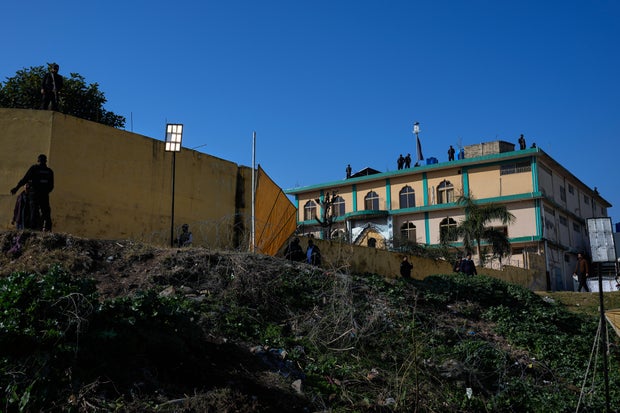
Pakistan arrests suspects linked to attack
Naqvi described the suspected mastermind of the bombing as an Afghan linked to IS. He alleged the attack was planned and the bomber trained in Afghanistan with financial backing from India— claims for which he provided no immediate evidence. There was no immediate comment from New Delhi and Kabul.
Naqvi also alleged that several militant groups were operating from the Afghan territory to launch attacks against Pakistan and urged the international community to take notice, warning that instability could spread beyond the region.
Addressing public concerns about security lapses, he said, “If one blast happens, 99 others are being foiled as well.”
The terror group suggested it viewed the Pakistani Shiites as legitimate targets, calling them a “human reservoir” that provided recruits to Shiite militias fighting the Islamic State in Syria.
Funerals for the victims
Earlier, more than 2,000 grief-stricken mourners gathered as coffins of those killed were brought to the same mosque for funerals of about a dozen victims, joined by Shiite community leaders and senior government officials. Funerals of other victims were to be held in their hometowns.
IS is a Sunni group that has targeted Pakistan’s Shiite minority in the past, apparently seeking to stoke sectarian divisions in the majority Sunni country. In 2022, it claimed responsibility for a suicide bombing that struck a Shiite Muslim mosque in Pakistan’s northwestern city of Peshawar, killing at least 56 and wounding 194.
Anjum Naveed / AP 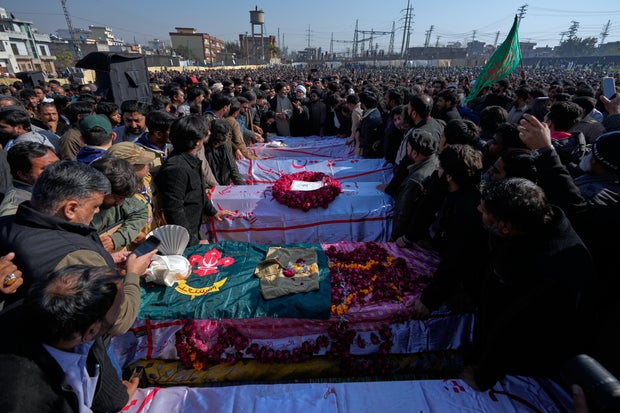
Pakistan’s Defense Minister Khawaja Mohammad Asif told reporters Friday that the attack signaled that Pakistan-based militants operating from Afghanistan could strike even in the capital. His remarks drew a sharp response from Afghanistan’s Taliban government.
In a statement, Afghanistan’s Defense Ministry condemned the mosque attack in Islamabad but said the Pakistani defense minister had “irresponsibly” linked it to Afghanistan. Pakistan has frequently accused Afghanistan, where the Taliban returned to power in August 2021, of harboring militants, including members of the Pakistani Taliban. Kabul denies the accusations.
Attack draws international condemnation
The attack drew condemnation from the wider international community, including the United States, Russia and the European Union.
Prime Minister Shehbaz Sharif said he was grateful for the messages of sympathy and support received “from across the globe” following what he called the “heart-wrenching suicide attack in Islamabad.” He said international support remained critical to Pakistan’s counterterrorism efforts and vowed the perpetrators would be brought to justice.
Anjum Naveed / AP 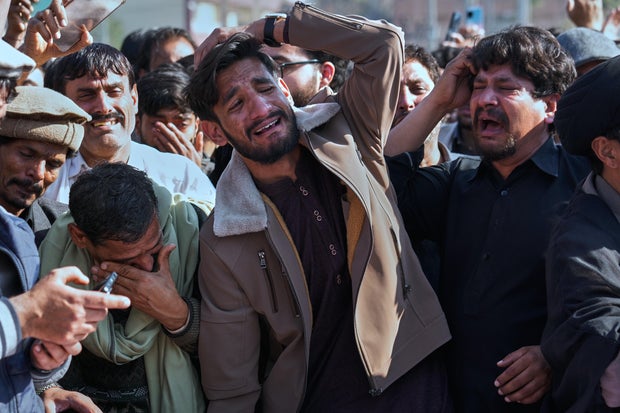
Although Pakistan’s capital has seen relatively few attacks compared with other regions, the country has experienced a recent rise in militant violence. Much of it has been blamed on Balochseparatists and the Pakistani Taliban, known as Tehrik-e-Taliban Pakistan, or TTP, which is a separate group but allied with Afghanistan’s Taliban.