
France’s foreign minister on Tuesday demanded an explanation after U.S. envoy Charles Kushner failed to show up to a diplomatic meeting focusing on comments about a slain far-right activist.
Jean-Noel Barrot summoned Kushner after the U.S. embassy in Paris reposted comments by the Trump administration that denounced “terrorism” and left-wing violence in France after the killing of far-right activist Quentin Deranque, 23.
This isn’t the first diplomatic row that Kushner – whose son Jared is married to President Trump’s daughter Ivanka – has been involved in — he previously criticized France’s President Emmanuel Macron for what he said was insufficient action against antisemitism.
JULIEN DE ROSA / AFP via Getty Images 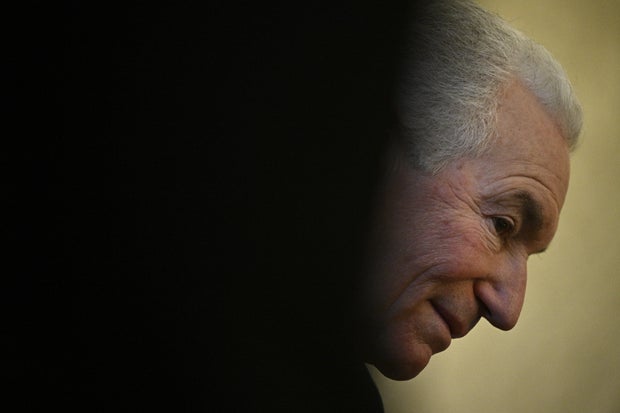
Kushner was summoned to the French ministry for those comments but skipped that meeting as well, sending an official instead.
On Monday, France moved to block Kushner from having access to government ministers.
Deranque died from head injuries following clashes between radical-left and far-right supporters on the sidelines of a protest against a politician from the hard-left France Unbowed (LFI) party in Lyon.
‘Surprise’
Foreign Minister Jean-Noel Barrot said he wanted an explanation over the U.S. ambassador’s failure to respect “the most basic customs of diplomacy.”
“It’s a surprise,” Barrot told broadcaster France Info on Tuesday, adding that the no-show “will naturally affect his ability to carry out his mission in our country.”
Kushner, 71, a multimillionaire real estate developer and former attorney, isn’t a professional diplomat.
He spent time in prison after pleading guilty in 2004 to 18 counts of tax evasion, witness tampering and illegal campaign contributions – though Mr. Trump pardoned him in 2020.
Barrot stressed the need “to have a conversation with him.”
“I believe all French people share the same feeling,” he said. “We do not accept that foreign countries can come and interfere in, then insert themselves into, our national political debate, whatever the circumstances.”
He added that Paris also wished to raise the issue of U.S. sanctions against several European figures, including former European Commissioner Thierry Breton.
However Barrot said the new incident wouldn’t affect the Franco-U.S. relationship.
Asked whether the US ambassador might be declared persona non grata, Barrot did not answer directly.
Yael Braun-Pivet, president of the National Assembly lower house, said it was important to keep talking.
“We need to talk to each other and say what we think, but at the same time we mustn’t let ourselves be pushed around,” she told broadcaster RTL.
A diplomatic source told the AFP news agency the ambassador cited “personal commitments” and sent a senior embassy official instead.
‘Not optional’
Kushner’s behavior raised eyebrows even among U.S. diplomats.
“One of the basic rules is that when you are summoned by the host country’s foreign minister, you show up. On time,” Charles Shapiro, a former U.S. ambassador to Venezuela, said on X. “It’s not optional.”
In December 2024, Mr. Trump defended the choice of Kushner as France’s envoy.
“It’s a great thing because he’s in our family,” Mr. Trump told the French magazine Paris Match.
“Essentially a family member of mine is coming to France; I am not sure it’s happening anywhere else.”
The choice was in keeping with Trump’s pattern of selecting people, often wealthy, who are close to his family or have proven their loyalty.