
A U.S. citizen working for a humanitarian organization in Congo has tested positive for the Ebola virus, the U.S. Centers for Disease Control and Prevention said on Friday, as the Central African country struggles to contain the swelling outbreak.
The CDC said it was working with the person’s employer, U.S. agencies, the public health authorities and Congolese partners to prevent further transmission and identify close contacts. It did not provide any further details.
Earlier this week, the Africa Centres for Disease Control and Prevention said that the outbreak is the fastest-growing Ebola outbreak ever recorded on the continent, with 1,830 confirmed cases in Congo, including 648 deaths. Cases have also been confirmed in neighboring Uganda.
In the first week of the outbreak, an American doctor working in Congo tested positive for the virus and was transferred to Germany for treatment. After weeks of care at a hospital in Germany, he recovered. He and his family, who were quarantined separately, returned to the United States in June.
Initially, Trump administration officials had said that the United States was planning to send Americans who are exposed to Ebola while abroad to a new facility in Kenya instead of flying them home. But the project has been suspended after an order from a Kenyan court.
Moses Sawasawa via AP 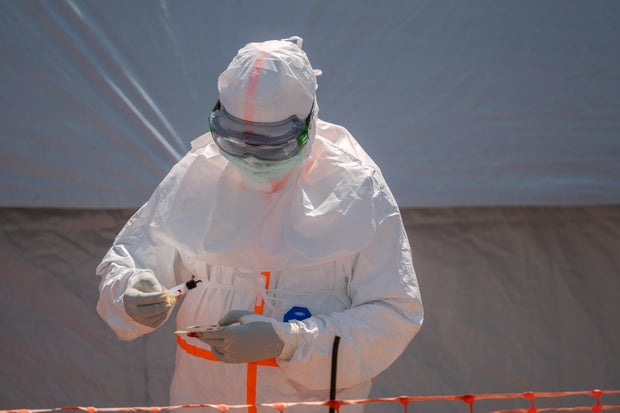
In a recent request to Congress, the Trump administration asked for $1.4 billion in supplemental funding to respond to the outbreak in the Congo, Uganda and elsewhere.
The Congolese authorities declared a fresh Ebola outbreak on May 15, after the disease had been transmitting for weeks without official detection, according to the World Health Organization
The outbreak is caused by the rare Bundibugyo virus, which has no approved vaccine or treatment. It often causes deadly symptoms. Last week, clinical trials for treatment began after researchers launched a highly anticipated study in the hope of fighting the virus.
Meanwhile, an ongoing conflict in eastern Congo has led thousands of people to flee the violence, spreading the virus further. Mistrust and attacks on health centers have also hampered the response. Doctors and other healthcare workers often do not have adequate protective gear, which can leave them vulnerable to the virus.