
Iran’s parliament passed a resolution early this week that would increase punishments for Iranians who interact in any way with foreign media outlets, organizations or individuals.
If the legislation is approved by higher authorities as expected, any contact with U.S. media entities, foreign embassies or institutions — whether it takes place inside or outside Iran — could land an Iranian in prison for up to two years unless they first obtain explicit written permission from the Ministry of Foreign Affairs, according to state media.
There are already very strict laws in Iran against sending information to exiled, foreign-backed Iranian media outlets, such as Iran International, or the U.S. and U.K. government-funded VOA Farsi and BBC Farsi. But the new legislation would go further, imposing extensive punishment on Iranians for any written or verbal contact with foreigners — especially foreign media.
The legislation would also ban educational and research activities linked to foreign entities, with a possible 10-year prison sentence for any person found to be involved in activities deemed “incompatible with Iranian culture.”
Majid Asgaripour/WANA/REUTERS 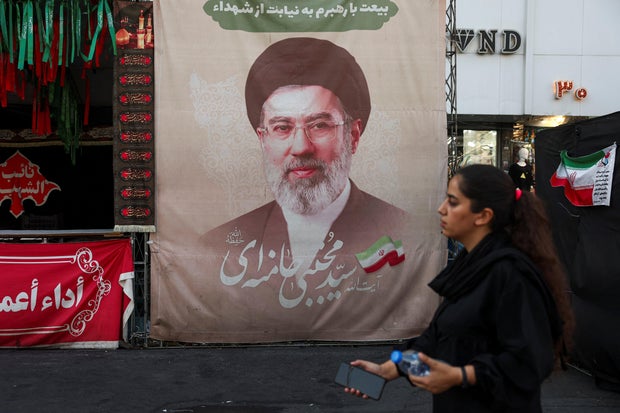
Iran’s Islamic Republic clerical leaders have, since rising to power in 1979, been extremely concerned about foreign infiltration and influence, especially by the U.S. and Israel.
After the 12-day war launched by Israel in June 2025, which the U.S. joined, the regime became even more paranoid, jailing dozens of people and executing some accused of sending video to outside entities, according to a May report by Amnesty International.
Marjan, a student working toward her political science master’s degree at Tehran University, who declined to give her full name, told CBS News in a phone interview that she used to work for some domestic news outlets before the June 2025 war, but that she now refrains from showing her face to any media organizations, and keeps all of her commentary anonymous.
“Iran under the new leadership of Ayatollah Mojtaba Khamenei is going toward North Koreanization,” she said, referring to the authoritarian regime led by Kim Jong Un. “I think Mojtaba is much more hard-line and closed-minded than his father, and the country will become a completely restricted and isolated country.”
Many people across Iranian society share her concerns, but few dare to voice them.
“The boundaries set by the new legislation are a serious concern for all Iranians,” a former government employee who asked for anonymity told CBS News. “Using basic applications like WhatsApp or other messaging apps could get you into trouble if stopped at mobile checkpoints, where phones are searched.”
“To avoid technical and security problems with governmental agencies, many Iranians are now switching to domestic alternatives like Rubika or Kasheef,” the man said, also speaking by phone, adding the caveat that such options make “it even easier for the security apparatus to spy on Iranians.”
Kaveh Kazemi/Getty 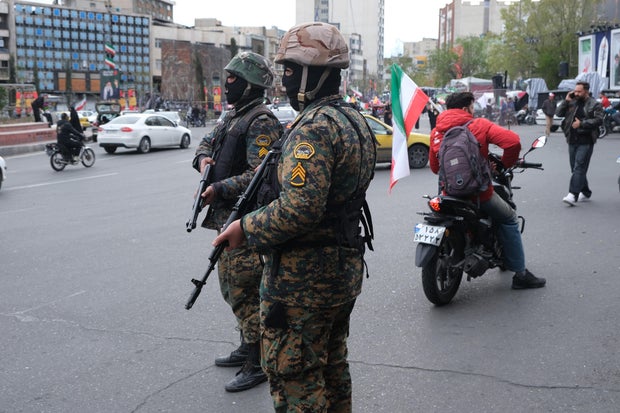
It is a deeply divided country, however, and the regime does have many supporters.
Professor Mohamadyaser Ershadmanesh, a scholar who works as an adviser to senior Islamic Revolutionary Guard Corps officer Yahya Rahimsafavi, told CBS News the legislation was a necessary “response to the country’s urgent need for consistency in legal monitoring tools to identify individuals and groups who work” against Iran’s interests.
He cited “the previous experience of foreign intelligence organizations’ interventions, including Mossad, CIA, MI6 and others,” and said the new law would “clearly define a good boundary for security and protection for our people and our institutions.”
“Criminalizing cooperation with foreigners will actually be a great help to Iran’s internal and national security,” he said.
Recently, photographer Yalda Moaiery was sentenced to 15 years in prison after being convicted by Iran’s opaque judiciary system of providing photographs of areas targeted by U.S.-Israeli strikes to organizations linked to the U.S. and Israel, as well as giving interviews to media outlets deemed hostile to Iran, according to the Reuters news agency.
Under Iran’s constitution, all legislation passed by the parliament requires approval from the Guardian Council and review by the Expediency Discernment Council to become law.
The bill passed Sunday by the parliament is widely expected to gain final approval, however, as the ongoing war has bolstered support for such societal restrictions among Iran’s ruling clerics.