
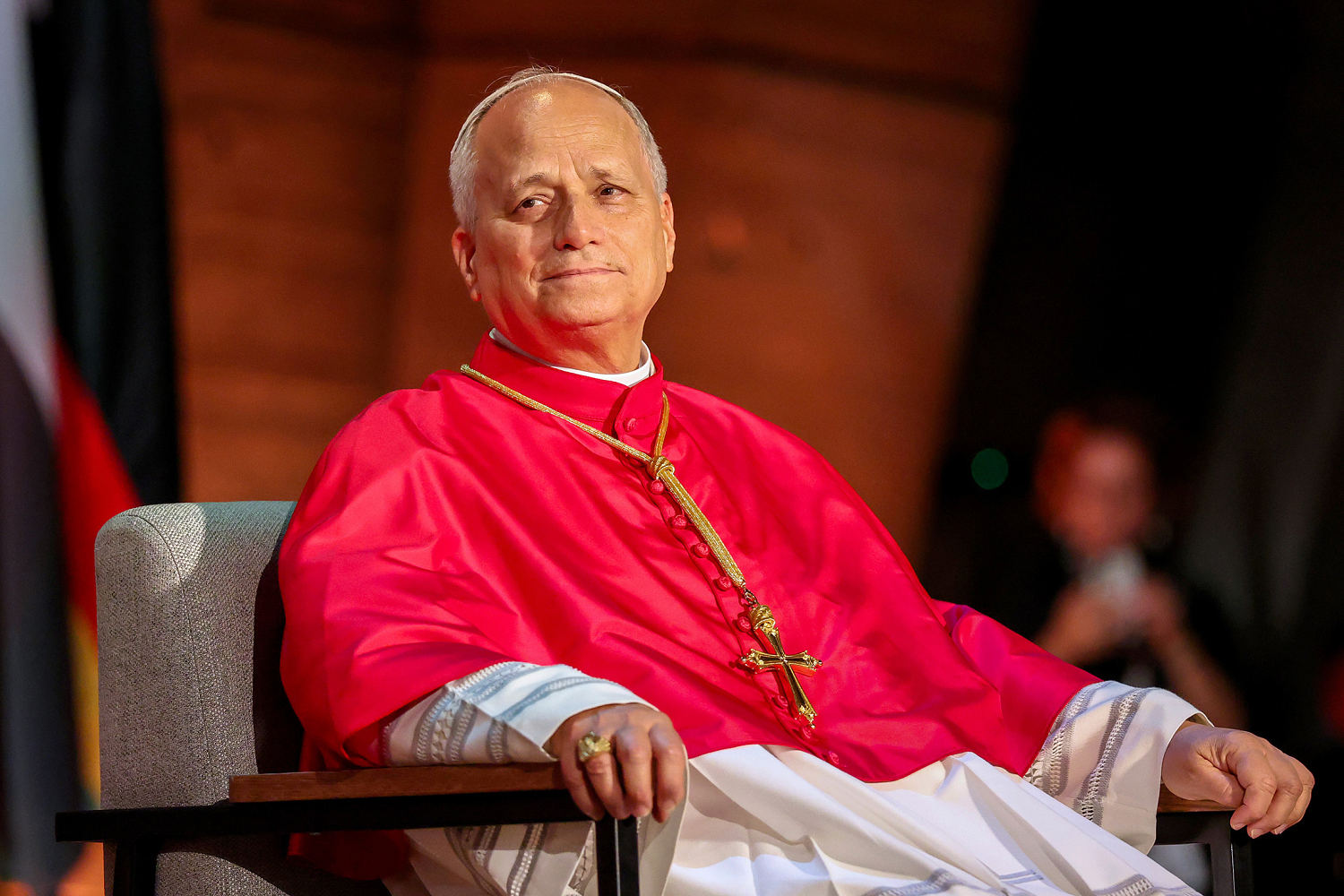
After undergoing surgery to remove a nodule in his lung, Pope Leo XIV was diagnosed with adenocarcinoma, a type of lung cancer.
The nodule was discovered in an early stage and was well localized, Leo, 71, told worshippers on Sunday, Oct. 11. It was found during recent routine medical tests, the Vatican said.
Pope Leo then underwent surgery on Tuesday, Oct. 13. During the 90-minute surgery, which the Vatican deemed “successful,” the pope was diagnosed with lung cancer, and a part of his right lung was removed.
Did Pope Leo XIV Smoke?
Pope Leo is not known to have ever been a smoker, NBC News reports.
About 80% of lung cancers in the U.S. are associated with smoking cigarettes, according to the Centers for Disease Control and Prevention. But a rising number of nonsmokers are also being diagnosed with lung cancer.
Lung Cancer Rising Among Nonsmokers
Pope Leo’s cancer diagnosis highlights the rising number of nonsmokers who’ve developed lung cancer. That includes many under age 50, who are typically not eligible for screening.
Adenocarcinoma, the type of cancer Pope Leo was diagnosed with, is a non-small cell lung cancer. While smokers tend to be diagnosed with small cell lung cancer, non-small cell cancers account for about 80% of all lung cancer cases in the U.S., the American Lung Association explains.
This type of lung cancer can affect both smokers and those who’ve never smoked, but it is the most common type of lung cancer diagnosed in nonsmokers, Dr. Panagis Galiatsatos, a pulmonary and critical care physician at Johns Hopkins Medicine, told NBC News.
“It’s not surprising that if (Pope Leo is) going to have lung cancer, it would be adenocarcinoma,” Galiatsatos said.
Lung cancer was previously thought of as exclusively a “smoker’s disease,” Dr. John Heymach, chair of thoracic/head and neck medical oncology at The University of Texas MD Anderson Cancer Center, told TODAY.com previously, and the majority of cases today are still associated with tobacco use.
But some types of lung caner are increasingly being diagnosed among nonsmokers, women and younger people. “The face of lung cancer is changing,” Heymach said.
It’s not clear exactly what’s responsible for that trend, Dr. William Dahut, chief scientific officer at the American Cancer Society, told TODAY.com previously, but notes that some cases could be driven by underlying genetic risks. Environmental exposures may also play a role.
Experts are now beginning to understand how these cancers differ from the types of lung cancer commonly seen in older patients and smokers, Heymach explained, and how treatment and screening strategies should adapt, too.