
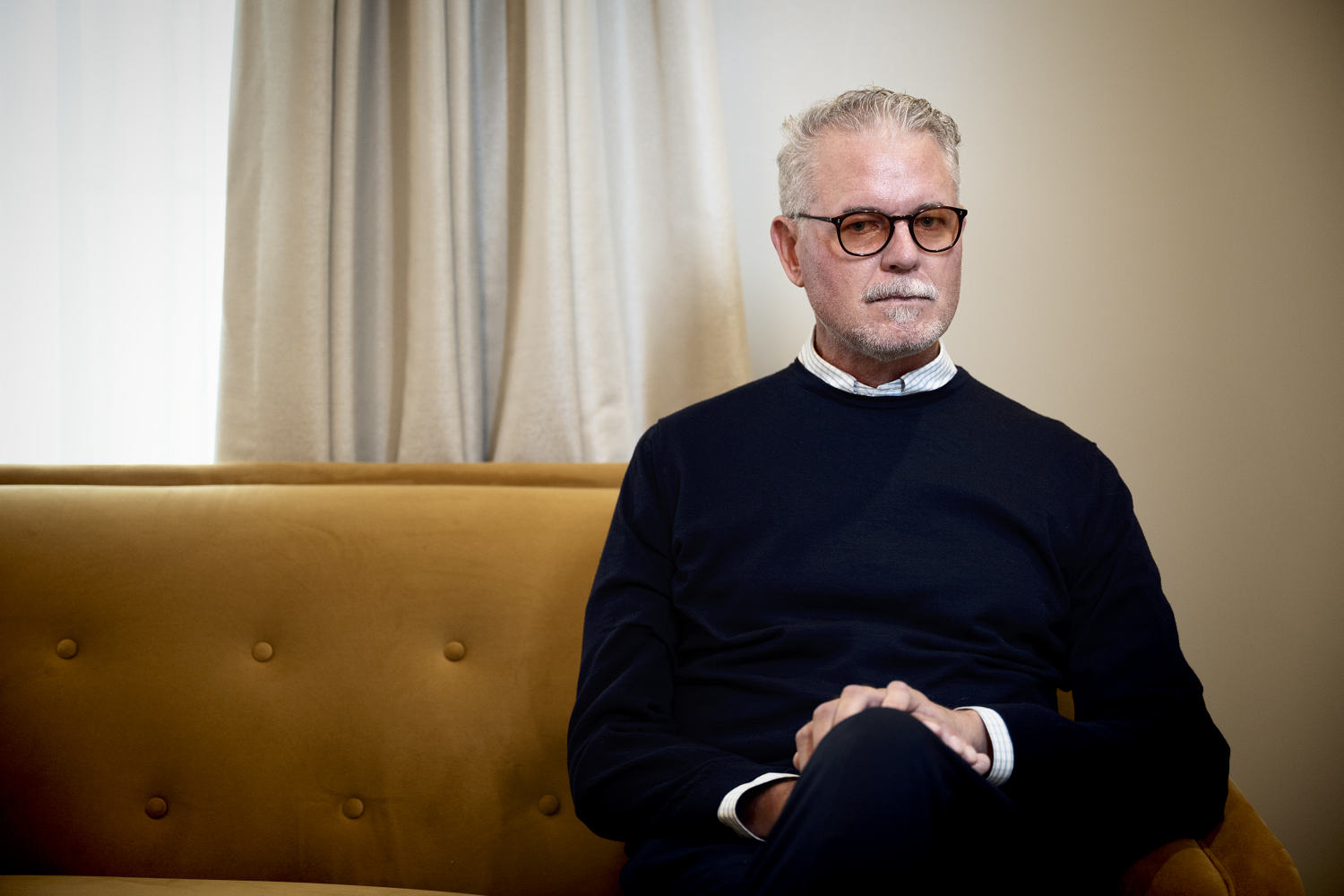
Actor Eric Dane died on Feb. 19, 2026, at 53 years old, 10 months after revealing he’d been diagnosed with ALS.
According to his death certificate obtained by NBC News, he died of respiratory failure.
“With heavy hearts, we share that Eric Dane passed on Thursday afternoon following a courageous battle with ALS,” his family said in a statement to NBC News.
“He spent his final days surrounded by dear friends, his devoted wife, and his two beautiful daughters, Billie and Georgia, who were the center of his world. Throughout his journey with ALS, Eric became a passionate advocate for awareness and research, determined to make a difference for others facing the same fight.”
In interviews, on social media and through his advocacy work, Dane shared details about how the disease progressed, discussed his symptoms and revealed the challenges of living with ALS.
Now, nine months after his death, Dane’s posthumous memoir, “My Book of Days: A Memoir in Moments,” publishing on Nov. 3, sheds even more light on his life before and during his ALS battle.
Here’s what to know.
What Was Eric Dane’s Cause of Death?
Dane died from respiratory failure, according to his death certificate. It notes ALS, a neurodegenerative disease that impacts muscle control, as the underlying cause of death.
The actor, known for his roles in “Euphoria” and “Grey’s Anatomy,” first revealed he had the disease in an April 2025 interview with People. “I am grateful to have my loving family by my side as we navigate this next chapter,” Dane told the outlet. He also said he planned to continue acting.
When Did Eric Dane’s ALS Symptoms Start?
In a June 2025 interview, Dane shared that his ALS symptoms had started about a year and a half prior — late 2023 or early 2024.
“I started experiencing some weakness in my right hand,” he said in the interview with ABC News.
At first, he blamed overzealous texting, but when the weakness progressed, he consulted a hand specialist, who then referred him to another specialist. “I went and saw a neurologist, and the neurologist sent me to another neurologist and said that ‘this is way above my pay grade.’”
In an interview with The Cut in December 2025, Dane’s wife, Rebecca Gayheart, recalled his sudden difficulties using chopsticks and dropping his food. “He was initially diagnosed with a few other things, but he had this sinking feeling that it was something more serious,” she said.
After nine months of searching for answers, he was diagnosed with ALS.
By June 2025, he only had one functioning arm. “My left side is functioning, my right side has completely stopped working,” he told ABC News.
He knew things would change soon. He could feel the strength in his left arm deteriorating. “It’s going,” he said, “I feel, like, maybe in a couple — a few more months, I won’t have my left either.”
“It’s sobering,” he added.
In a September 2025 video shared on social media, Dane’s speech had changed, his words slow and slurred. In it, he stressed the importance of finding a cure for ALS.
Dane eventually lost his ability to speak, but used an AI voice to communicate. “It really made him hopeful. … He was really emotional about it — we all were, and it was just such a gift,” Gayheart said.
Gayheart also revealed to The Cut that Dane was being cared for by nurses 24/7.
How Long Did Eric Dane Have ALS?
Dane was diagnosed with ALS in 2024, after noticing weakness in his right hand. He lived with it for two years.
Since learning he had the disease, Dane said he’d never forget those three letters: ALS. “It’s on me the second I wake up,” he told ABC News.
Still, he kept on, sharing positive updates. “I feel great when I’m at work,” he told E! News in June 2025. “Of course, there have been some sort of setbacks, but I feel pretty good. My spirit is always pretty buoyant, so at the end of the day, that’s all that matters.”
In unreleased footage Dane filmed with I AM ALS, an advocacy organization, he said life with this diagnosis is “uncharted territory.”
“I’m learning as I go. I’m just trying to, like, walk through this thing with as much grace and dignity as I can so I can show my kids: this is how you do this.”
Having ALS is hard, he added, but it’s tough for his loved ones too.
In his final interview, Dane shared four messages for his daughters.
- “Live in the present.”
- “Fall in love.”
- “Find your people.”
- “Fight with every ounce of your being.”
Since Dane’s passing, Gayheart shared updates about how she and their daughters are coping. “You know, we’re hanging in there,” Gayheart told People in Sept. 2026. “I think it’s definitely a challenging season, but we’re doing our best.”
“The girls are both in high school — which is also a big transition under any circumstance — so I’m just staying close to my kids,” she added.
Dane was unsure about writing a memoir at first, Gayheart told People. But she’s “grateful he did, because it gives my girls the opportunity to know their dad as a human being,” she said about their children.
What Is ALS?
ALS, short for amyotrophic lateral sclerosis, also known as Lou Gehrig’s disease, is a degenerative neurological disease that impacts nerve function. The illness targets nerve cells in the spine and brain, according to the Cleveland Clinic, causing progressive deterioration of muscle control. There is no way to prevent it, and there is no cure.
As the disease evolves, people with ALS can experience muscle weakness, cramps, stiffness, drooling, fatigue, trouble swallowing and trouble speaking, the Cleveland Clinic adds.
Eventually, patients might lose their ability to walk, stand, breathe and speak.
Eventually, symptoms can lead to respiratory failure, the Cleveland Clinic says. Respiratory failure is life-threatening because it keeps people from being able to breathe in enough oxygen.
Other complications of ALS include feelings of overwhelm, stress, depression and anxiety.
What Causes ALS?
Researchers are still investigating what causes ALS, but scientists believe that, for some, it’s genetic and, for others, it’s caused by environmental factors, such as exposure to toxins, according to the Cleveland Clinic.
Some people can inherit the genetic makeup that causes ALS, but it’s more common that someone’s ALS is sporadic.
What is the ALS Life Expectancy?
Though there are treatment options that can help slow its progression, ALS will shorten life expectancy. After diagnosis, patients are expected to live between three and five more years, according to the Cleveland Clinic.
“An estimated 30% of people live five years or more, and 10% to 20% live at least 10 years,” it adds.
Dane died two years after receiving his diagnosis.
What Are the Treatments for ALS?
ALS is irreversible; however, there are ways to slow the progression of symptoms, according to the Cleveland Clinic. These treatments include:
- Medication
- Therapy or rehabilitation
- Nutrition protocols to support the additional energy expenditure ALS causes, and support healthy bones and weight
- Breathing support