
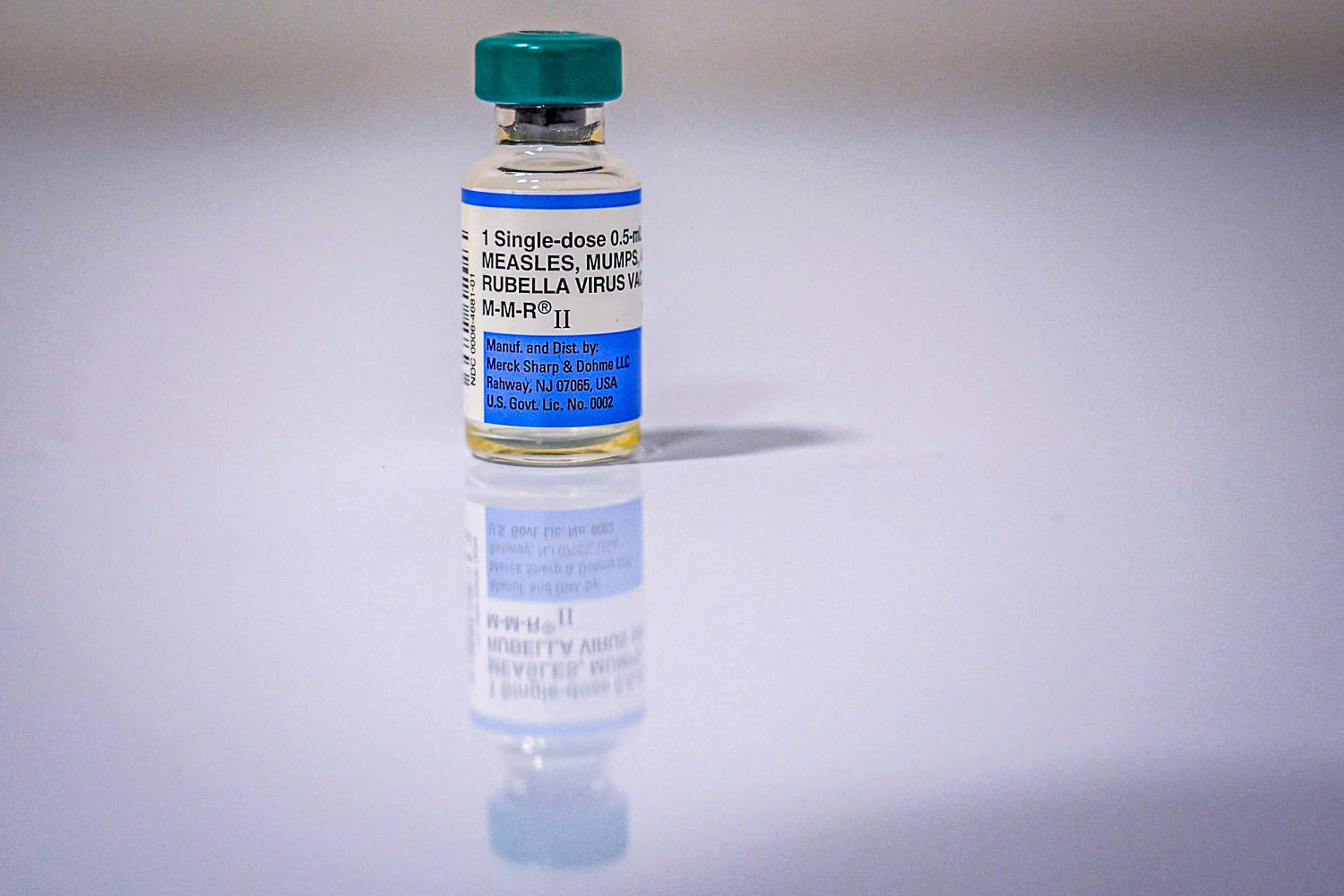
Utah’s measles outbreak is speeding up as it spills into the eighth month, getting so bad that some local health officials have turned to talk radio to get the message about vaccination to more people.
As South Carolina seems to be getting a handle on its outbreak — the largest in the United States in three decades — measles in Utah is raging through unvaccinated children in several communities. There have been almost 100 confirmed illnesses in Utah in the last three weeks and likely many more families have been affected, experts say. More people have caught measles in the first few months of this year than all of last year.
Since measles began spreading in Utah last summer, state health officials have barely acknowledged it. Health officials in the southwest corner of the state, which still accounts for the bulk of cases, haven’t been holding vaccine clinics, they say, because most residents aren’t interested in getting the shots.
During the state’s first media briefing March 5, state epidemiologist Dr. Leisha Nolen pleaded with residents to get vaccinated. A nurse practitioner recounted in detail several severe measles cases she’s treated. A number of families who had coped with the virus “didn’t realize how bad” measles was, Nolen said.
The Utah Department of Health and Human Services has updated its website weekly but has otherwise remained largely silent. The agency hasn’t posted about the outbreak on its Facebook and X platforms since the outbreak began. The agency declined a request for interview.
In southwest Utah, a remote tight-knit community which has accounted for most of the cases, it’s been a struggle to reach residents. Most people in the area are linked to the Fundamentalist Church of Jesus Christ of Latter-day Saints (FLDS), a religious group that is wary of outsiders. Vaccination rates are very low among school-age kids.
David Heaton, public information officer for the Southwest Utah Public Health Department, said there’s no main television station or newspaper in the five counties under his agency’s jurisdiction. Instead, he has harnessed social media and talk radio to provide updates on the outbreak.
“We do a lot of radio spots, probably two to three times a week,” he said. “Talk radio is big down here.”
Heaton’s messaging on measles vaccinations has evolved throughout the outbreak.
“We’re trying to find ways of tweaking the message,” he said. “If you don’t want to get all your vaccines, at least get this one. Or we’ve started saying, consider who’s in your circle. Are there little kids under 5 that might have a harder time healthwise if they get measles?”
Few seem to be listening.
“There hasn’t been any sense of alarm or living life differently,” he said. “I’m surprised by some people who I talk to informally who still haven’t heard the message, which makes me wonder, are we covering all of our bases? Is there something we’re not aware of?”
There’s a different response among people living in the northeastern part of the state. The TriCounty Health Department, which encompasses three counties, has had five measles cases since mid-February. The agency saturated its social media with information and held two vaccine clinics.
Thirty-three people showed up to get vaccinated, said Sydnee Lyons, TriCounty Health’s public information officer.
“Our community is going above and beyond in terms of asking questions and making the right decisions for their families and trying to protect not only themselves but their community members,” Lyons said. “Everyone’s working together.”
Measles is the most contagious virus known in the world. When it infiltrates pockets of unvaccinated people, up to 9 out of 10 will become infected. People who are infected can spread the virus four days before the characteristic rash shows up.
While the virus is continuing to spread uncontrolled in the southwest part of Utah, other parts of the state — including areas closer to Salt Lake City — are now experiencing increases in cases.
According to an NBC News/Stanford University investigation, the MMR vaccination rate for kindergarteners in hard-hit Washington County is 79.2%. It’s 92.6% in Salt Lake County, which had measles exposures at hospital emergency departments, a restaurant, a gas station and an aquarium last week alone. An immunization rate of 95% is needed, experts say, to achieve the level of herd immunity to prevent outbreaks.
Containing measles outbreaks relies on effective communication encouraging the public either to get vaccinated or to stay away from others until the threat passes.
In South Carolina, state epidemiologist Dr. Linda Bell has held dozens of public briefings — one each week since the outbreak was declared in early October. The briefings are publicly available on the agency’s website. The state rolled out mobile vaccine clinics and invited public health experts to help with contact tracing and data management.
Because Utah’s public health system is decentralized, it’s up to local and regional health departments to respond to outbreaks the way they see fit.
The Southwest Utah Public Health Department is not holding vaccine clinics.
“We have the capacity,” Heaton said, “but there’s been no surge in demand for the vaccines.”