
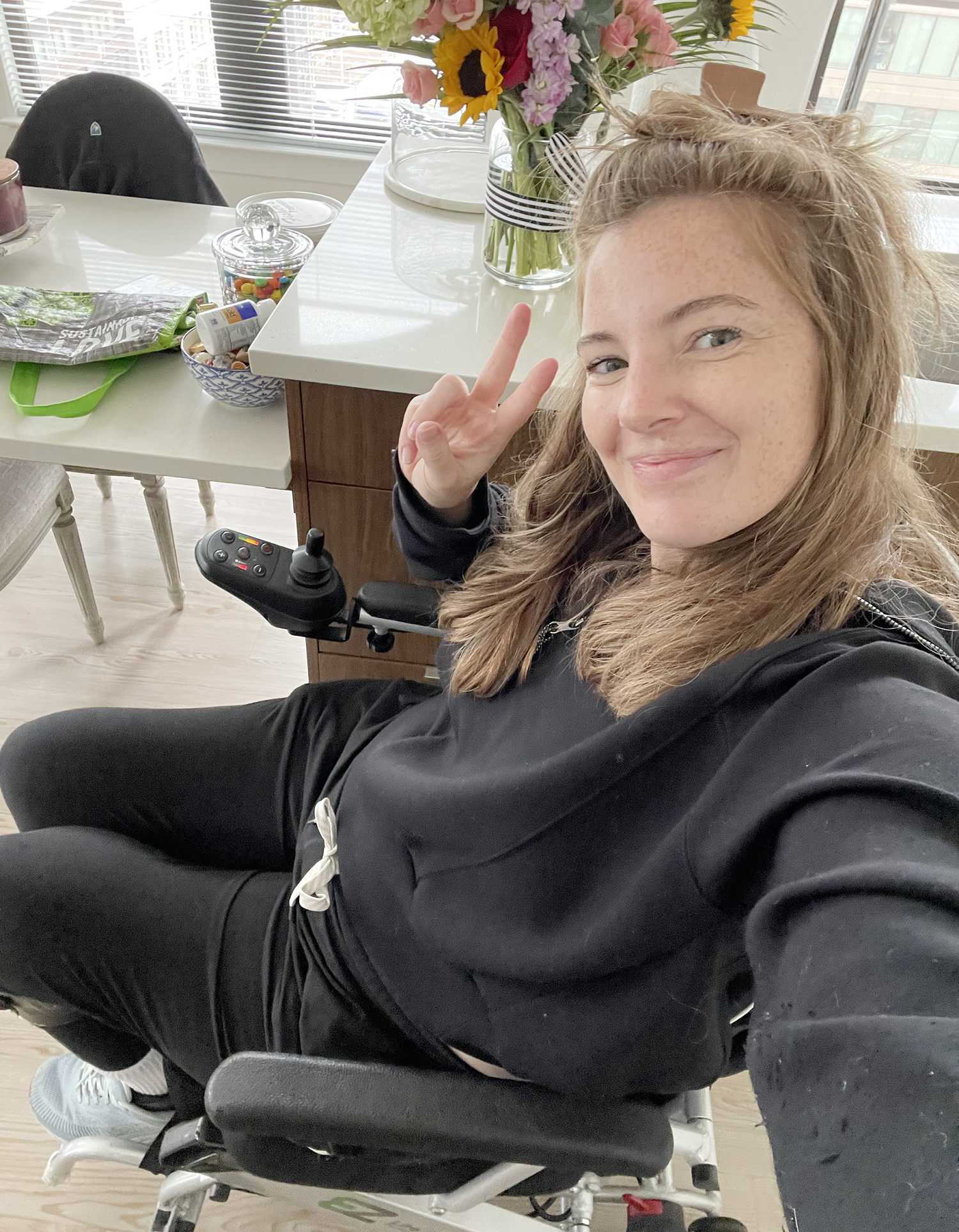
Brooke Eby, who transformed her diagnosis with amyotrophic lateral sclerosis into one of social media’s most compelling chronicles of resilience, humor and advocacy, helping change how millions of people understood a devastating disease, has died. She was 37.
The cause was complications of ALS, also known as Lou Gehrig’s disease, according to the ALS Network.
When Eby was diagnosed in 2022 at age 33 after years of unexplained symptoms, she faced a prognosis that people with the disease know all too well: ALS is a fatal, progressive neurodegenerative disease with no cure and few effective treatments. Rather than retreat from public life, she leaned into it.
Her videos, often equal parts comedy routine and medical diary, documented the realities of losing mobility without surrendering her personality. She joked about wheelchairs, dating, awkward encounters with strangers and the absurdities of living with a terminal illness, drawing millions of viewers who found themselves laughing before they learned something about ALS.
In a 2023 appearance on TODAY, Eby described her philosophy succinctly. “Levity is my superpower,” she told Savannah Guthrie. “It’s really how I’m bringing my story to the world. I’m trying to use humor and really let ALS be heard.”
Her advocacy extended beyond awareness. Speaking on the Brain & Life podcast, she challenged scientists, policymakers and donors to “operate at the speed of ALS,” arguing that a disease measured in months demanded research that moved with equal urgency.
Working with the adaptive clothing company Silverts, she helped create the B.E. Collection, a line of stylish adaptive clothing designed for younger people with disabilities who often found existing options too clinical or geared toward older adults. A portion of the proceeds benefit Team Gleason, which supports people living with ALS.
Unlike many public advocates who emerged after years of activism, Eby entered the spotlight almost accidentally. Two months after her diagnosis, she began writing down the funny moments of her new reality. Her first TikTok introduced audiences to a young woman determined to make people laugh before asking them to confront uncomfortable truths about terminal illness.
What began as a handful of videos grew into one of the largest online communities devoted to ALS.
“I always say my North Star was giving a face to ALS,” she said on the Brain & Life podcast. “Then one of my friends said, ‘Doesn’t it help you too?’ I had never even thought about it like that.”
Born on Dec. 22, 1988, Eby grew up in Maryland and later worked in the technology industry at Salesforce. At 29, while living in New York City, she noticed she could no longer push off properly with her left foot while walking. Doctors initially suspected more common explanations. Over several years she underwent repeated testing before receiving an ALS diagnosis.
Eby often described the emotional aftermath without embellishment.
“I remember crawling into bed with a bag of M&M’s, party size,” she recalled during her appearance on TODAY. “It was just survival.”
A turning point came at a friend’s wedding, where she arrived using a walker identical to the bride’s grandmother’s. Mortified, she considered leaving early until a friend suggested embracing the moment instead. Soon the bride was limboing beneath her walker and guests were taking “walker rides” across the dance floor.
That evening, she later said, taught her that humor could dissolve discomfort more effectively than silence.
As her disease progressed, from leg braces to a cane, then a walker and ultimately a wheelchair within months, she adapted rather than withdrew. She traded workout classes for reading, advocacy, speaking engagements and content creation, documenting not only her physical decline but the unexpected expansion of her emotional world.
“When I got diagnosed,” she said on TODAY, “the future — that runway— was just cut off.”
Yet she often insisted the disease had sharpened rather than diminished her appreciation for life.
“I’m aware of more of the beauty and kindness in the world now than I was.”
In interviews, she resisted being described as inspirational simply because she was living with a terminal illness. What she wanted, she said, was attention directed toward the disease.
“There are two things that I would ask of people,” Eby told Savannah. “ALS research needs money… and follow my story. I think we associate ALS with characters who don’t look like me.”