
Canned foods like beans are already pantry staples, but you might not realize just how good for you they are. And once you know, you might find yourself reaching for them a lot more often.
“I’m a huge fan of canned plant-based proteins because they’re convenient, affordable and incredibly versatile,” says Natalie Rizzo, registered dietitian and TODAY nutrition editor.
Among no-cook proteins, it doesn’t get much simpler or more nutritious than a can of beans or chickpeas. Plus, canned goods are cost-effective and have a long shelf life.
“As a busy person, I rarely ever have time to soak and cook dried beans, so having canned options in the pantry means I can pull together a nutritious meal in just a few minutes,” Rizzo says. “And nutritionally, canned beans and legumes are still excellent sources of protein, fiber, vitamins and minerals.”
Dietitian’s No. 1 Canned Plant-Based Protein
Chickpeas
Chickpeas are Rizzo’s go-to canned plant protein.
They’re “probably my most-used canned protein,” she says, and “they’re incredibly versatile.” She likes to mash them into a sandwich filling, toss them into a salad, roast them for a crunchy snack or blend them into a dip.
In one half-cup serving of chickpeas, you’ll find 7 grams of protein and a little more than 6 grams of fiber.
And don’t just rinse away the liquid that canned chickpeas come in. That liquid is called aquafaba, Rizzo explains, “and it contains starches and proteins that give it some of the properties of egg whites.” You can whip aquafaba into a foam that can be used to add structure to vegan meringues, mousses and more.
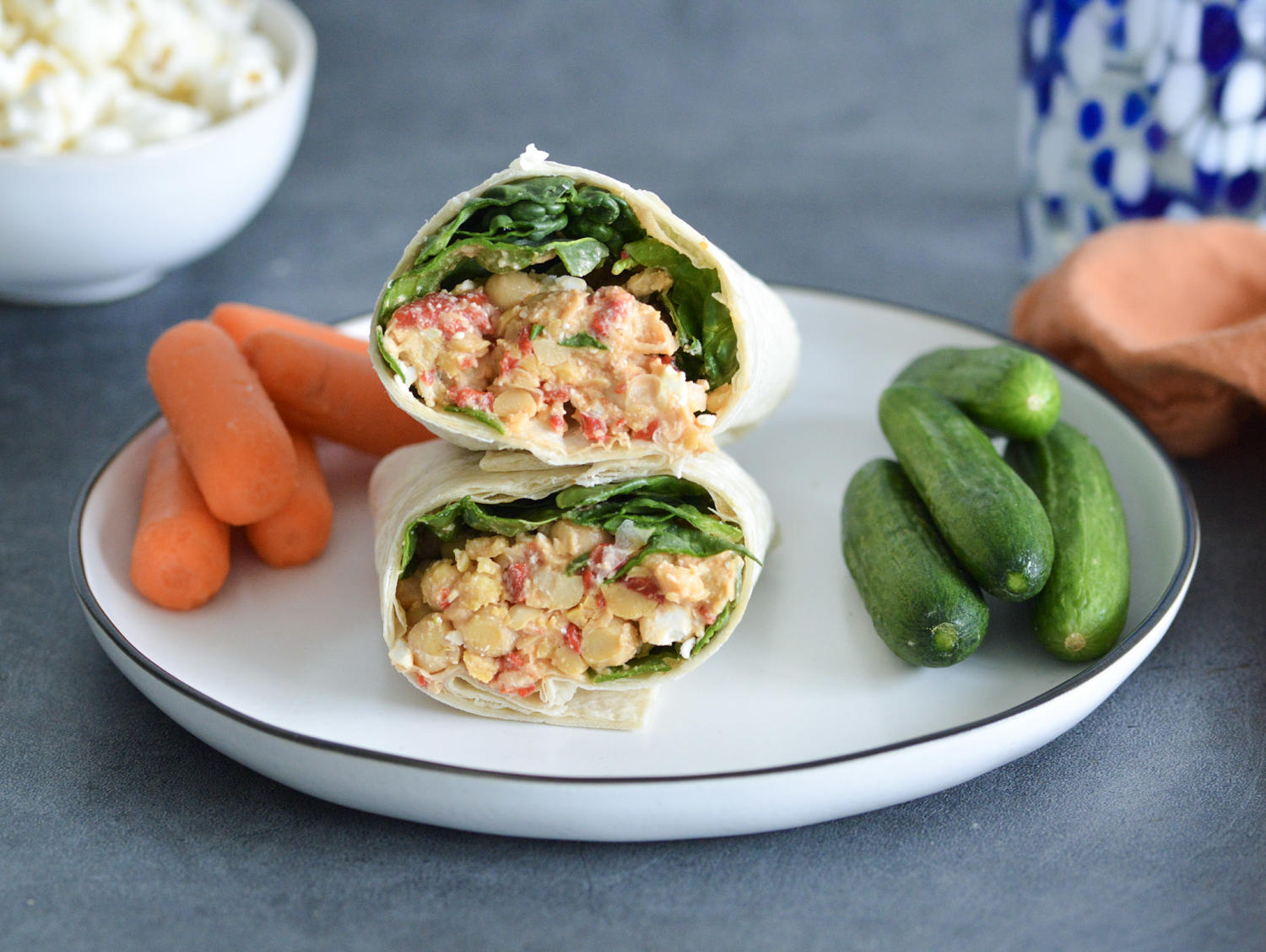
Try Rizzo’s Mediterranean Smashed Chickpea Wraps for an easy lunch that’s rich in both plant protein and fiber.
Other Convenient Canned Plant Proteins
Black Beans
Another of Rizzo’s favorite canned plant proteins is black beans. All beans will provide some protein and fiber, but black beans are particularly high in both and naturally lend themselves to some of Rizzo’s favorite meals.
You’ll find 8 grams of protein and 8 grams of fiber in just a half-cup serving of black beans.
While canned beans do have more sodium than dry beans, “I don’t think people need to stress about that,” Rizzo says. Simply remove the canning liquid by draining the beans into a colander and rinsing them under cold water, she explains. That will significantly reduce the sodium.
“They’re great for tacos, burrito bowls, quesadillas, soups, and homemade veggie burgers,” she says. Her Sweet Potato and Black Bean Quesadillas are a delicious, colorful way to use both beans and seasonal veggies to make a quick high-protein meal.
Lentils
Canned lentils are “a fantastic source of plant protein and fiber,” Rizzo says.
Like the other beans and legumes on this list, lentils pack a filling combination of nutrients. A half-cup serving will net you a whopping 9 grams of plant-based protein and about 8 grams of fiber, which supports both gut and heart health.
“I love adding them to soups, salads and pasta sauces,” Rizzo says. You can also use lentils to bulk up burger patties and add more nutrients to the meal.