
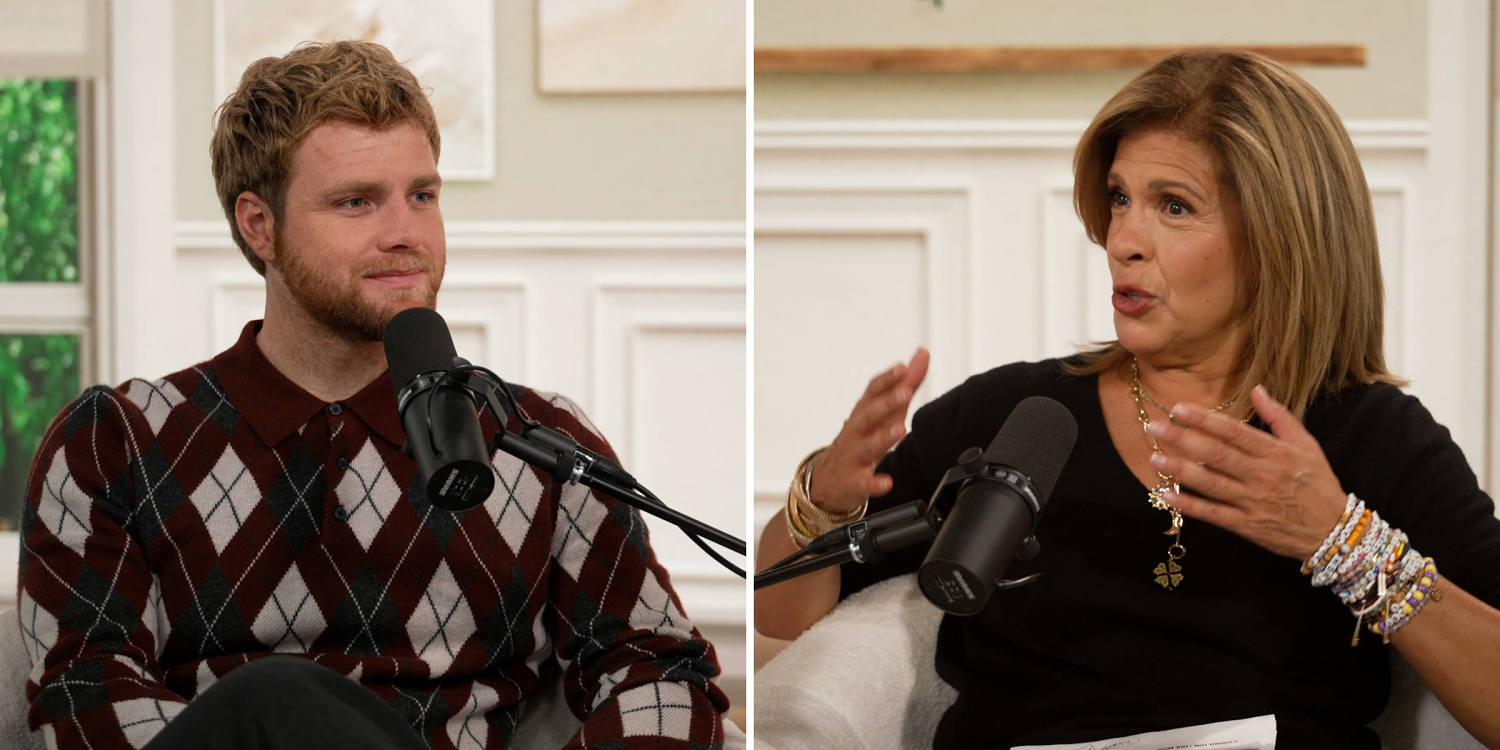
“People die twice. They die when they die, and they die when you stop telling their story,” says Alex Warren, the Grammy-nominated singer whose grief has become one of the defining subjects of his music.
Warren’s dad passed away from kidney cancer when he was just 9 years old. But it took him time to discover the healing power of keeping his father’s memory alive.
“I stopped telling my Dad’s story for a very long time to the point where I forgot who he was. Thankfully, I have these videos that I get to watch and I have the ability to talk about him and keep him alive,” he told Hoda Kotb in the October 21 episode of “Making Space.”
Hoda revealed she also avoided talking about her dad after his death.
“My Dad died when I was in college and we didn’t talk about him because I was afraid it was going to hurt my mom,” she said. “You just sort of stay away from the conversation. It’s like the scary monster.”
“Why do you think you stopped talking about him?” she asks Warren.
The reason behind the silence was wanting to fit in.
“I was a heavily bullied kid, and I think that whenever I spoke about my Dad, I gave people ammunition. I just didn’t want to be any more different than I already was,” he says. “I think I handled grief really wrong back then, but I also think that when I was nine years old, it wasn’t a popular thing to talk about. Most people would be like, ‘That’s your personal life; you keep it to yourself.’”
It wasn’t until his twenties that he realized he could help other people by talking about his grief and encouraging them to do the same.
“I felt so alone but I was surrounded by so many people. The one thing in life that everyone goes through but is never talked about is loss,” he said. “ I thought that I was the only person in the world who had [experienced it], because no one talks about it. So when I started doing these shows, I wanted to create a place where people can go.”
That’s why he fully supports when people bring ashes of loved ones to his show.
“Please keep doing that. Hold them up. Talk about them. Bring them. Keep that energy alive,” he said. “If you feel comfortable enough to cry at my show, it’s because you look around and you realize that everyone else has gone through that.”
He, too, finds the concerts therapeutic, admitting he is still working through his own grief. Hoda mentions a clip of him breaking down in tears during a concert and Warren says he cries every night.
“I don’t know what it is. I just cry, and it’s this healing thing,” he says. “I have so many feelings that I haven’t been able to process, and I will never stand on that stage and act like I have it all figured out.”
Hoda asks whether there is a burden that comes with being the vessel for other people’s pain.
“That’s the flaw with what grief is today … everyone looks at it as a negative, like ‘oh, that’s your business, keep it to yourself’ and that’s how no one talks,” he said. “To me I think it’s as simple as, make a joke, tell me a story about them, say their name.”
“I think that that’s the moral of it: Making grief and loss not a thing that you have to only talk about in therapy,” he added. “If you can talk to a stranger, a friend or a loved one, and you make it a normal conversation, it becomes less of a ‘Why are you talking about that?’ and more of a ‘Let’s celebrate that.’”